(866)7-SWORDS (779-6737) 
Free Shipping on Orders more than $300! (Continental U.S. Only)
Expedited Shipping Available! Call or E-mail us at service@strongblade.com
Warspike Knight's Hand-and-a-Half(Bastard) Sword
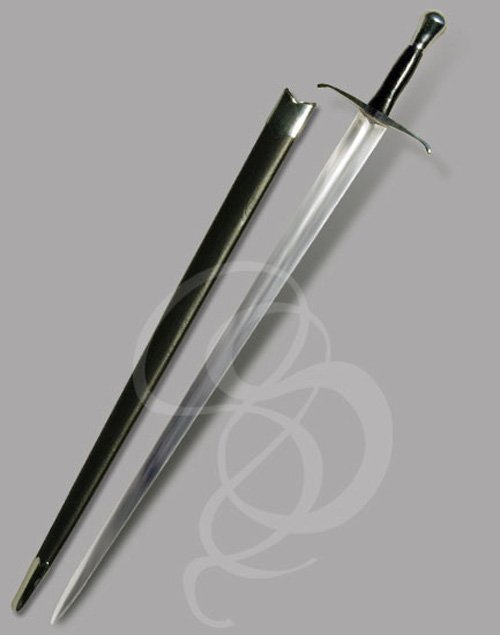


- Hybrid Construction Combines the Best Qualities of Several Sword Types
- Hand-and-a-Half Style Hilt
- Padded Leather Grip
- Tapered Blade for Slashing or Thrusting
- Now Available in Standard or Fully Tempered
- Carbon Steel Blade
- Full Tang
- Models on Sale
To Order
Model No.
Price
Availability*
Description
Accessories
* Stock items ship from Strongblade in 1-3 business days. Please allow additonal 2 to 5 business days for engraving or sharpening.
Product Description
Classifying swords can be a bit tricky, particularly when the sword in question has been designed to meet criteria from several different classes. This blade would most likely fit into the Type XVIIIa of Ewart Oakeshott's classification system (for those of you who follow that sort of thing).
The Warspike combines the length of a long arming sword, the hilt of a small hand-and-a-half sword, and just a hint of a "tuck" thrusting blade.
Although the hilt of this sword would just allow for hand-and-a-half work (complete with the pear-pommel that most bastard swords have), this sword is a little shorter than most norrmal bastard swords. It also lacks any sort of ricasso, which is another common trait for bastard swords. The blade is clearly meant for both slashing and thrusting, although slashing was the primary intended use.
Whatever classification is usedone thing is certain, it's a fantastic sword to hold and swing. The Type 4 cross is a very standard and elegant cross of the middle-ages and the acute angle of the blade would make it especially lethal for downed opponents: the blade would slide through a visor or into the gaps of armor with ease.
The Warspike has a hand-forged, High-carbon steel blade, steel cross and pommel, and a hand stitched leather-wrapped wood hilt. This blade would be acceptable for light sparring.
The Warspike combines the length of a long arming sword, the hilt of a small hand-and-a-half sword, and just a hint of a "tuck" thrusting blade.
Although the hilt of this sword would just allow for hand-and-a-half work (complete with the pear-pommel that most bastard swords have), this sword is a little shorter than most norrmal bastard swords. It also lacks any sort of ricasso, which is another common trait for bastard swords. The blade is clearly meant for both slashing and thrusting, although slashing was the primary intended use.
Whatever classification is usedone thing is certain, it's a fantastic sword to hold and swing. The Type 4 cross is a very standard and elegant cross of the middle-ages and the acute angle of the blade would make it especially lethal for downed opponents: the blade would slide through a visor or into the gaps of armor with ease.
The Warspike has a hand-forged, High-carbon steel blade, steel cross and pommel, and a hand stitched leather-wrapped wood hilt. This blade would be acceptable for light sparring.
Product Details
| Overall Length: | 44 inches |
| Blade Length: | 36 inches |
| Width: | 9 inches |
| Depth: | 1.5 inches |
| Weight: | 3 lbs. |
| Material of Construction: | High Carbon Steel |
The sword is shipped with an unsharpened blade, but the blade may be sharpened.
Includes leather wrapped scabbard
Images of This Product from Our Engraving Gallery
Sorry, did you say something?
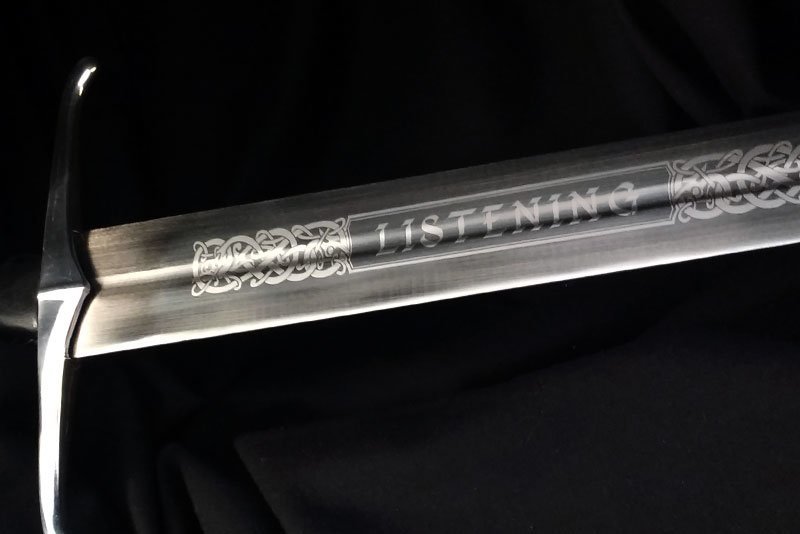
Visit our Engraving Gallery to see more examples of our custom engravings.
 © Copyright 2005-2026 Strongblade LLC