(866)7-SWORDS (779-6737) 
Free Shipping on Orders more than $300! (Continental U.S. Only)
Expedited Shipping Available! Call or E-mail us at service@strongblade.com
Windlass 6-foot 6-inch Viking Halberd with Steel Butt-Plate
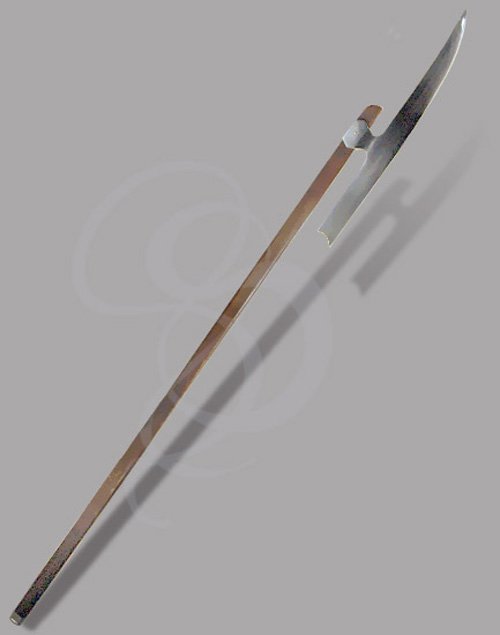


- Six and a Half Feet Tall!
- Windlass High Carbon Steel Axe Head (More than 2 Feet Long)
- Stout, Squared Hardwood Staff
- Steel Butt Plate for Added Protection
- Unbelievably Cool
Product Description
We are sorry but this item is no longer available.
This model is not currently available please see this Viking Halberd as a possible alternative. This is one of my favorite long axes of all time. It's a Viking longaxe, sometimes referred to as a Viking halberd. It's not technically a halberd; more like a bardiche or a Scottish Lochaber axe, but a hasty translator of some Norse historical texts translated the Viking's longaxe as "Halberd," and it seems to have stuck. The United Polearms Coalition of Northern Europe has argued to strip this long axe of it's Halberd designation, it's been in debate for years but but knowing the UPC, nothing will probably ever be done. You'll remember that mess back in 1978 when they tried to change the Bill-Guisarme to the "William-Guisarme." My editor is looking over my shoulder and telling me to knock it off and to tell everyone that there is no such organization as the United Polearms Coalition of Northern Europe. Sigh. So much for making things more interesting.
By whatever name, this axe kicks big-time ass. And when I say "big-time" I mean six feet and six inches of big time. The thing towers over anyone other than professional basketball players. It's quite possibly the most intimidating long axe I've ever seen, aside from my brother's underwear. The massive 28" blade is frankly terrifying. It's not sharp but can be sharpened easily if you're into guillotines.
Vikings would have used axes like this primarily in warfare. They were just a bit inconvenient to bring along on their longships, so most likely would not have seen a lot of action during raids. There is written historical evidence that these type of axes were used in large scale Viking warfare, although none of the long axes have ever been found.
The squared hardwood shaft of this axe is rugged and easy to hold. It is finished with a steel butt=plate that protects the long axe from wear and tear during repeated plantings and liftings. The plate would also have made a dandy nose crusher when the fighting came in close.
If you're looking for a large, intimidating long axe, you're probably not going to find anything much better than this. And if you're a fan of the Vikings (we mean Medieval, not Minnesota, but either one would work).
Product Details
Overall Length: 80"
Blade Length: 28"
Blade Width: 2.75"
Weight: 4.3lbs
Material: Blade: High Carbon Steel, Shaft: Rugged, Squared hardwood
Related Items
Osprey; Viking Raider Battle Sword
 © Copyright 2005-2026 Strongblade LLC