(866)7-SWORDS (779-6737) 
Free Shipping on Orders more than $300! (Continental U.S. Only)
Expedited Shipping Available! Call or E-mail us at service@strongblade.com
Windlass Parazonium: Greek and Roman Dagger
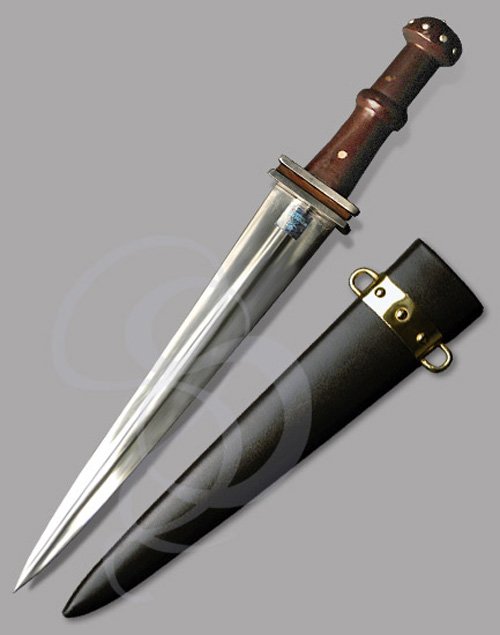


- Hand Forged and Beautifully Designed
- Carried by Roman Nobles and Higher Officers
- High Carbon Steel Blade
- Steel and Hardwood Grip and Guard
- Steel-Studded Hardwood pommel
Product Description
We are sorry but this item is no longer available.
This style of dagger was shared by both Romans and Greeks. It was generally worn by the upper classes or high ranking soldiers and was a symbol of honor, virtue. In fact, larger versions of these daggers have been seen on statues of emperors and kings alike. It was a sign of prestige to wear one and screamed to the world, "I'm better than you, and if you disagree, I can stab you in the esophagus."This particular version of the parazonium was hand forged by Windlass Steelcraft. It features a gorgeous, gleaming triangular blade of high-carbon steel with a thick, noble fuller running down the center. A narrow (yet powerful) steel-and-hardwood gaurd protects the hand and a steel-studded polished pommel balances the whole assortment nicely. This is truly one of the nicest and most well-balanced daggers that we sell.
The dagger is extremely light and would have been a horrifyingly lethal weapon in trained hands. The triangular blade would have pierced armor and skin with ease, and internal organs with even more ease. A waisted grip gives the hand a comfortable and secure hold on the weapon.
The leather-wrapped wooden sheath that this dandy comes with has built-in belt slots, allowing this Roman dagger (or Greek dagger) to be worn on a standard belt.
Product Details
Length: 15�
Blade Length 10"
Material: Polished High-Carbon Steel Blade. Polished Hardwood Grip. Polished hardwood Grip with Steel Studs. Steel and Hardwood Grip. Made by Windlass Steelcrafts�.
Comes with a black leather-wrapped Wood sheath. Sheath has brass accents and belt loops.
 © Copyright 2005-2026 Strongblade LLC