
Categories

Medieval Arming Swords
Often this was the weapon of choice of the medieval knight. It was commonly used during the middle ages. It was weilded with one-handed, allowing the knight or soldier to hold a shield in their other hand. The knight and his arming blade were inseparable. Though a knight might switch other instruments throughout his life and even during a single battle, the arming sword was his for life. In fact, it was likely that a knight would go through more wives than arming swords, and, when you consider that they were often handed down from generation to generation, it's quite possible that an entire family tree would use the same blade.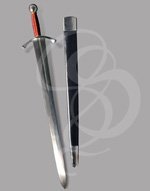
SBA-ARCHERSWORD
European Archer's Short Sword
$85
In Stock!
This European short sword is a beautifully weighted with nickel-chromed hilt, pommel and scabbard accents. The grip is tightly wrapped with a rich red copper wiring and the blade is rugged high-carbon steel.
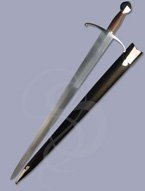
SBA-GENSTEELSWORD
Gensteel Elegant High-Carbon Steel Arming Sword and Sheath
$126
In Stock!
The Gensteel is a fine example of the paradoxes of war. It is a beautiful thing to behold. Elegant and tapered, with gracefully curling tips on the guards and a sophisticated, spade-shaped pommel.
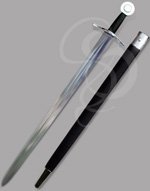
SBA-KNIGHTPROTECTOR
Medieval Knight Protector's Arming Sword
$140
In Stock!
This is a gorgeous reproduction of a medieval arming sword. The blade is made from a high-carbon steel. A long, graceful fuller runs almost the entire length of the blade, giving the sword additional strength and lightness.
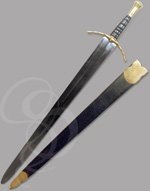
SBA-DEATHBRINGER
Deathbringer: Hand-and-a-Half Mercenary Sword
$135
Out of Stock
The extremely wide blade and the scalloped brass crossguard which appear to be talons or skeletal fingers help earn the name for this model. Although not a true hand size, it does have a grip wide enough for some hand-and-a-half work.
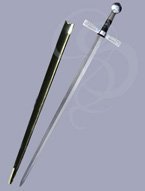
SBA-GOTHDREAM
Goth Dream Arming Sword with scabbard
$88
Out of Stock
The GothDream has a historic base but with a bit of a fantasy flare, Based on the arming sword or war spike design, it long, light and very well balanced. The hilt is distinctive yet comfortable to wield.
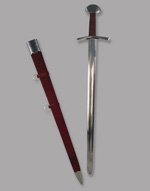
SBA-JAEGER-F
Jaeger Rugged Viking Sword - Stage Combat and Live Steel Perfomances
$102
Out of Stock
Designed for stage combat or theatrical re-enactment, the guards and pommels are made from a polished-but-uncoated steel, which prevents chipping when struck. The thicker blade edge and round tip add an extra measure of safety.
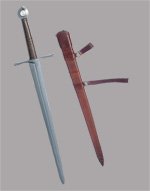
SBA-NORMAN-TWOHAND
Norman Sword with Molded Leather Scabbard with Belt Hangers
$154
Out of Stock
The Norman two-handed sword is one of our most beautiful pieces. Boasting an impressive overall size of 45 inches with a blade length of 35 inches it still a comfortable weight and very well balanced.

SBA-WARSPIKE
Warspike Knight's Hand-and-a-Half(Bastard) Sword
$95
Out of Stock
The Warspike combines the length of a long arming sword, the hilt of a small hand-and-a-half, and just a hint of a "tuck" thrusting blade. The excellent balance and light weight make the Warspike an exceptional addition to any collection.
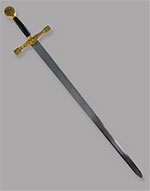
SBCM-PENDRAGON
King Arthur's Sword, Excalibur - Arthur Pendragon
$69
Out of Stock
The Pendragon captures the power, nobility and mystery of legendary King Arthur and his mystical sword, Excalibur. This version of Excalibur is long--nearly four foot in overall length, with a wide stainless steel blade that's absolutely perfect for engraving.
Strongblade Lore
(A Bit of History According to Strongblade)
The knight and his arming sword were inseperable. Though a knight might switch other weapons throughout his life and even during a single battle, the arming sword was his for life. In fact, it was likely that a knight would go through more wives than arming swords, and, when you consider that arming swords were often handed down from generation to generation, it's quite possible that an entire family tree would use the same sword.
Because of this, arming swords were much more than just weapons. They became symbols of the men who carried them. Badges of honor, symbols of rank and nobility, and messages to all that the bearer was both a gentleman and warrior; that he could save your soul or take it in an instant.
The relationship between the knight and his arming sword was similiar, if not so religious, as the relationship between a samurai and his katana. Knights would have sacred or other meaningful words inscribed into the blades of their swords, inlaid with silver or gold. These words served as both an inspiration and personal motto for them. Occasionally, knights would rent out space on their swords to local merchants, and would, with each kill, proclaim "This death was brought to you by Samuel's Bake Shop, where you don't have to spend a lot of bread to get a loaf" or something similar. Actually, I don't think those last two sentences are true, but it would have been a good way for the knights to raise money for their church, now wouldn't it?
As mentioned, arming swords were handed down from generation to generation. The swords, used in combat, often suffered damage or breakage, so the blade would be refitted, or a new pommel would be attached, or perhaps a new grip would be added to replace an old worn one. It's possible that the sword a great-great grandson bore no longer resembled the original.
Arming swords in warfare were used mostly as backup weapons for lances and much larger battle swords. The knight would draw these swords when dismounted, or when his other weapons were lost or broken. The arming sword, however, would have been used quite often in one-on-one combat and in smaller scale combats. In some tourneys, knights would first joust with lances, then, when unseated, would draw their arming sword and continue the combat.
Inspired by Model SBA-GENSTEELSWORD
 © Copyright 2005-2026 Strongblade LLC