Swords
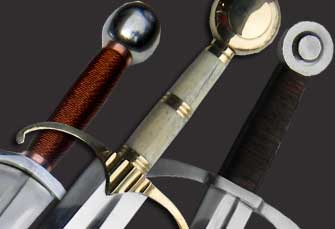
Perhaps the only truly perfect combat instrument ever created; A seamless extension of your arm with no moving parts and little maintenance needed. It served us well for thousands of years and swords have never misfired or ran out of ammunition.
All Swords
Browse our full selection.
Arming
The choice of medieval knights. Typically they were wielded in one hand while a shield was held in the other hand.
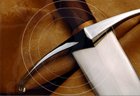
Battle Ready
Full tang and tempered these are the real deal
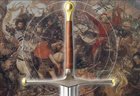
Big Swords
These are our largest we offer, often requiring two hands to wield.
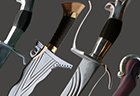
Esterlina Line
The Esterlina line are premium fully functional battle ready.
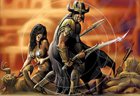
Fantasy
These are not historical replicas but they are still pretty cool.
Filipino Swords
Handcrafted battle ready traditional Filipino swords
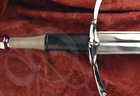
Hand-and-Half
These are used with one or two hands.
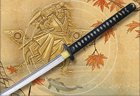
Katanas and Asian
Katanas, samurai and other Asian blades.

LARP
Made of foam or latex and used for Live Action Role Play(LARP) or for just having fun.
Lightsabers
An elegant weapon from a more civilized time.
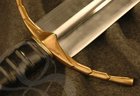
Medieval and European
These are the classical blades of medieval Europe.
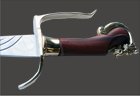
Military
Military replicas including Civil War era models.

Pirate
Pirate, cutlasses and other curved blades.
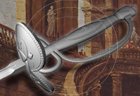
Rapiers
The most sleek and civilized of all blades.
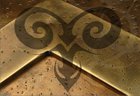
Roman & Greek
Whether you're standing shoulder to shoulder on the beaches of Troy or facing down a Thracian gladiator in Rome, these are the weapons you would have used.
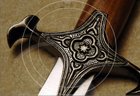
Scimitars
Scimitars, falchions and sabers.
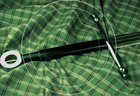
Scottish & Irish
Gaelic including Scottish and Irish.
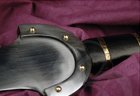
Short Swords
These were especially effective for in close fighting.
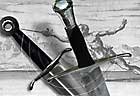
Stage Combat and Theatrical Reenactment
With blunted tips and thicker edges these are better suited for theatrical re-enactment and stage fighting.
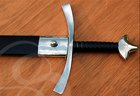
Viking
Save us from the fury of the Northmen.
A Sample from Strongblade Lore - Sword Buyer's Guide Part 1
It looks great.
It's shiny and pointy in the right places and even comes with a sheath. In fact, it looks remarkably similar to the sword you were looking at on the previous web site, but those guys wanted twice as much for it, and they didn't include a sheath! Ha! You think to yourself:
I found myself a deal. I Rule.
Then the UPS guy comes in his adult ice cream truck and you get the first clue that you may not rule as much as you thought you did. The box is a bit ... well ... smaller than you had expected. So, you open it up in a flash of tape and a particularly sharp key and there before you is not the massive Scottish claymore that you had anticipated, but a 14" miniature replica. You slap your forehead and whisper to yourself:
Read the full article...
Custom Engraved
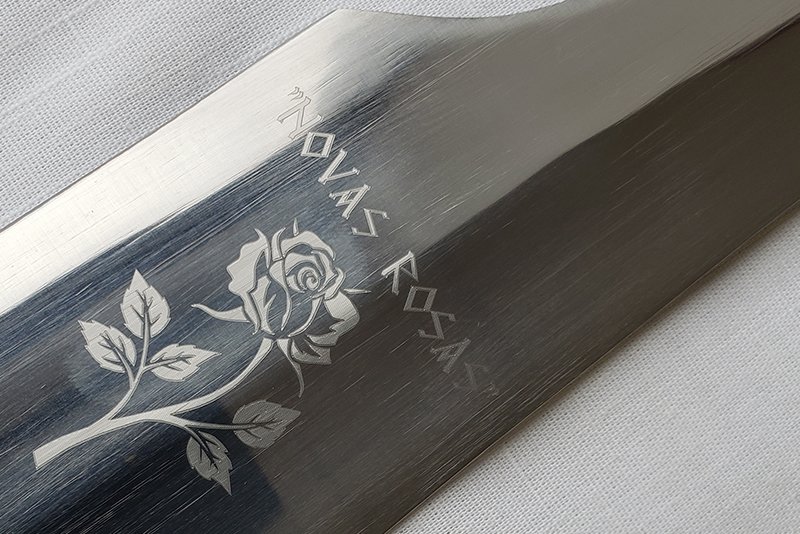
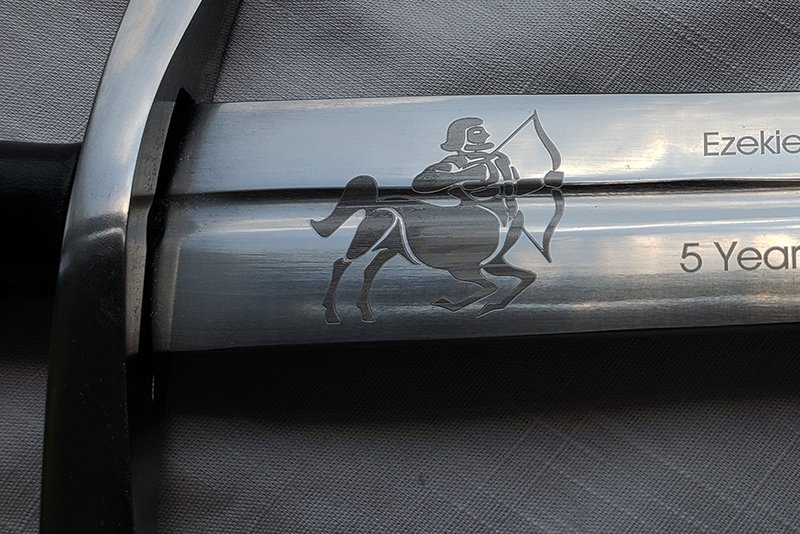
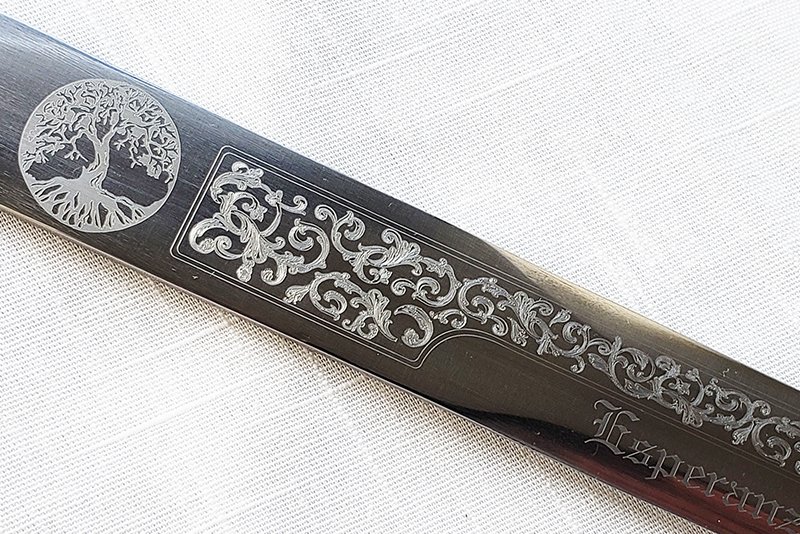
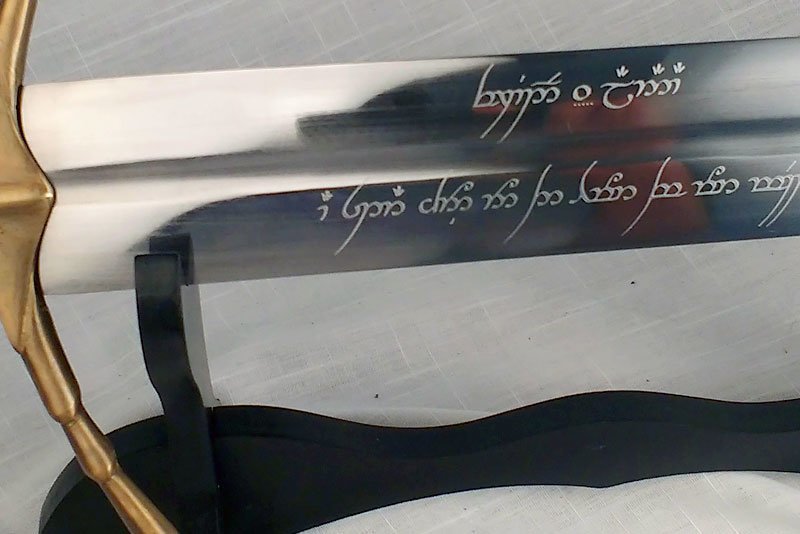
We have have dont thousands of engravings and it never ceases to amaze us how much it can add to the attraveness of an item. Our online App allows you to create a design with text, pre-designed graphic patterns or choose from our library of over 1,000 artwork images. We can engrave family crests, coat of arms, military insignia, corporate logos, organization emblems and just about any other form of graphic that can be represented as line art. Our online App can handle most designs but, if you have a design beyond what can be done by our App, please contact us, we are happy to discuss your project with you. Our
Engraving Gallery shows samples of some of our engravings we have done in the past. We have also listed a few engraving samples below.
SAGITTARIUS ZODIAK SYMBOL.
TREE OF LIFE AND IVY SCROLL ON A RAPEIR